Story
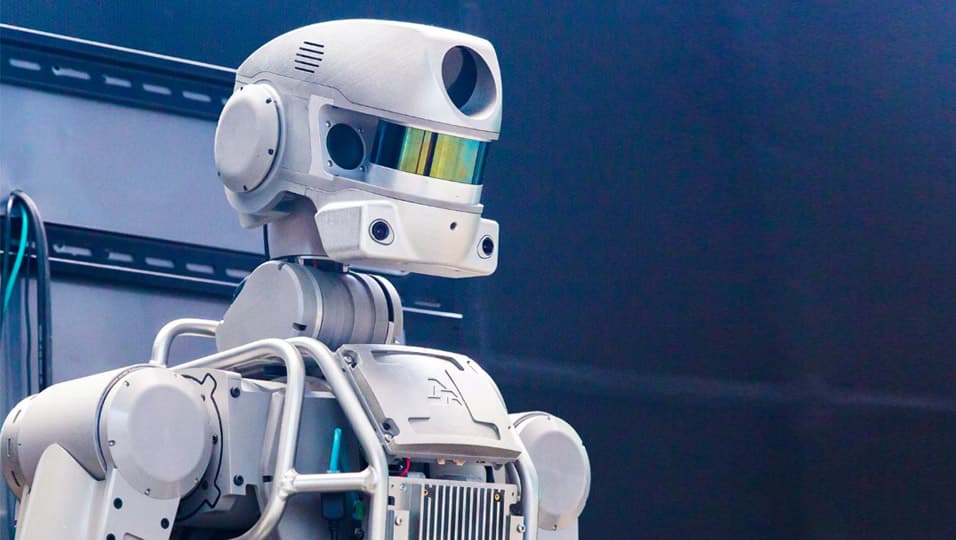
FEDOR began as a Russian state-backed anthropomorphic robotics project rather than a commercial humanoid. The Advanced Research Foundation described it as the first Russian anthropomorphic robot; Android Technics, based in Magnitogorsk, built the demonstrator and documented the 2014–2016 development window in its company history.
The robot's public peak came in 2019, when Roscosmos flew the modified platform as Skybot F-850 on Soyuz MS-14. Official Roscosmos copy called it a humanoid robot and framed the flight as an experiment: the robot occupied the commander's seat, docked with the ISS mission profile, and later returned to Earth in the Soyuz descent module.
FEDOR belongs on the roster as a historically notable humanoid demonstrator, not as a shipping product. The Reality Score rewards the unusually strong official evidence and the verified space mission, while penalizing the lack of commercial traction and the gap between the experiment and broader claims about useful humanoid labor in space.
Reality check
FEDOR was a real, state-backed Russian anthropomorphic robot that completed an ISS/Soyuz demonstration mission, but it was not a commercial platform or a general-purpose deployed labor robot. Its strongest evidence is official: FPI, Roscosmos, and Android Technics all document the robot and the 2019 spaceflight.
- FPI described FEDOR as the first Russian anthropomorphic robot
- Developed by NPO Android Technics with Russia's Advanced Research Foundation
- Modified for Roscosmos as Skybot F-850 and flown to the ISS on Soyuz MS-14 in 2019
- Returned to Earth after the Soyuz MS-14 mission
- Public attention often overstated the robot as a general space worker; official sources frame it as an experimental demonstrator
- No evidence of commercial production or broad operational deployment