Story
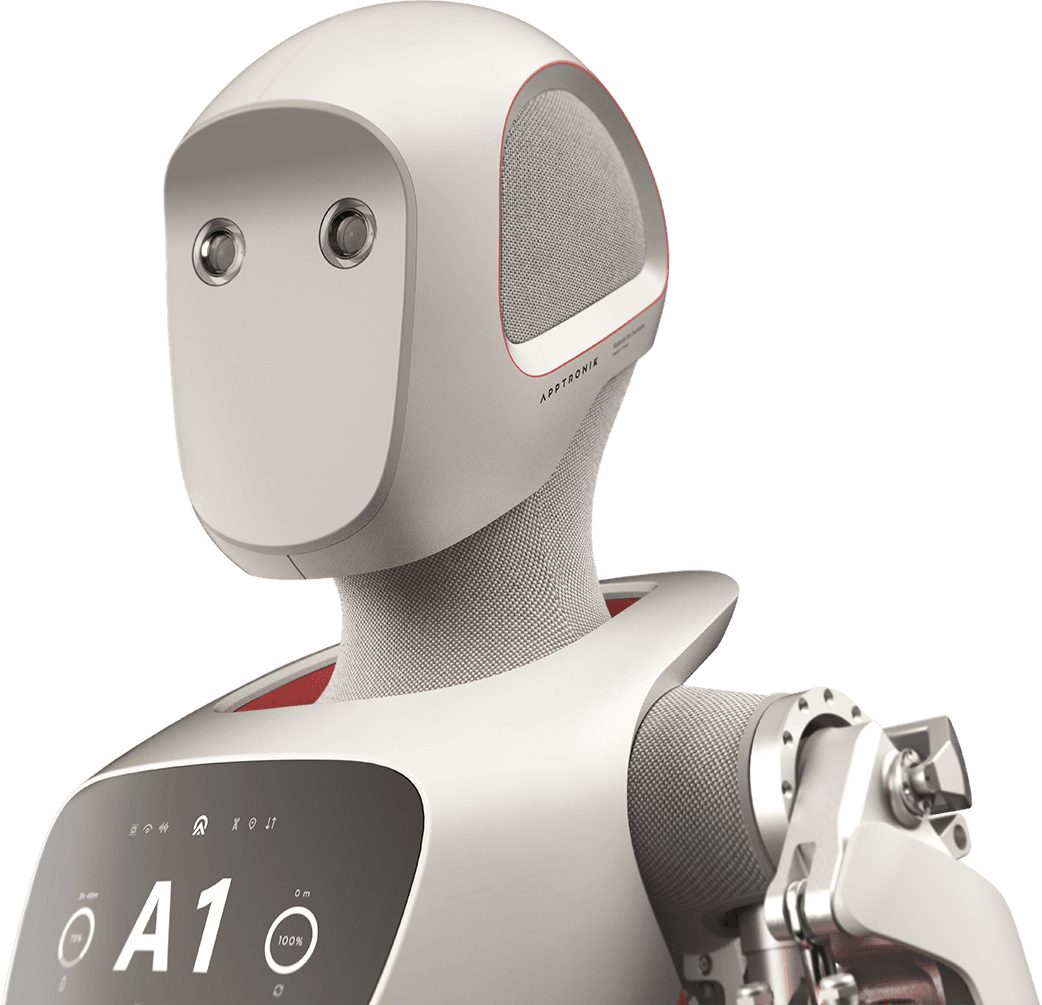
Apollo's pedigree is unfair. The team at Apptronik came together at the University of Texas at Austin's Human-Centered Robotics Lab and built the actuators that ended up inside NASA's Valkyrie. NASA Spinoff now gives that technology-transfer story a cleaner official source, connecting NASA Johnson humanoid robotics work, Valkyrie, Apptronik SBIR support, and NASA's Game Changing Development Program to Apollo's commercial path.
What they did not have, until 2024, was a customer. The Mercedes-Benz pilot in Berlin changed that. Apollo moves sub-assemblies on an automotive line — quiet work, no parkour videos, no kitchen demos. NASA Spinoff's 2026 article says Apollo robots are currently helping humans in factories build Mercedes-Benz cars and more Apollo robots, but it does not provide unit counts, paid-commercial status, uptime, task success rates, autonomy levels, or exact factory locations. Apptronik's February 2026 funding release adds a different signal: a $520 million Series A-X extension, a Series A total above $935 million, nearly $1 billion in total capital raised, and company-named partnerships with Mercedes-Benz, GXO Logistics, Jabil, and Google DeepMind/Gemini Robotics. HumanoidRoster treats that as production-scaling and partner context, not proof that GXO or Jabil are Apollo deployment sites. Apptronik publishes the basics on its product page — five-eight, one-sixty, fifty-five pound payload, four hours on a battery pack — and leaves the rest unspecified. The June 2026 Robot Park announcement adds important platform context: Apollo 2 is now described in bipedal and wheeled-base configurations, and the company says its training workflows combine teleoperation with autonomous execution across customer-driven tasks. That is meaningful data-infrastructure evidence, not a public autonomy percentage or customer uptime metric.
Reuters separately reported on June 30, 2026 that Apptronik launched the training hub and unveiled Apollo 2, adding Tier B corroboration for the Robot Park/Apollo 2 news without changing HumanoidRoster's autonomy, deployment, or score caveats. HumanoidRoster treats the Reuters item as corroboration of the launch, not as public operating metrics, autonomy percentage, customer-side validation, or paid deployment proof.
The Reality Score reflects strong hardware and a verified pilot, balanced against a thin sample. One automaker is not a category. The next twelve months will tell whether Apptronik scales into a real second customer or stays a one-pilot company.
Reality check
Apollo's hardware comes from people who built NASA Valkyrie. The Mercedes pilot is real. Apptronik publishes basic specs on its product page, but deeper detail (DoF, top speed) and independent field testing remain limited.
- Apptronik team includes alumni from NASA's Valkyrie humanoid project
- Mercedes-Benz pilot active since 2024
- NASA Spinoff traces Apollo's technology-transfer chain through NASA Johnson humanoid robotics work, Valkyrie, Apptronik SBIR support, and NASA's Game Changing Development Program
- NASA Spinoff says Apollo robots are currently helping humans in factories build Mercedes-Benz cars and more Apollo robots
- Manufacturer-published specs — 5'8" (172 cm), 160 lbs (73 kg), 55 lb payload (25 kg), 4 hr per battery pack
- Apptronik announced a $520M Series A-X extension in February 2026, bringing its Series A to more than $935M and total capital raised to nearly $1B
- Apptronik announced its expanded Austin Robot Park, a nearly 90,000-square-foot humanoid data-collection and training facility, and unveiled Apollo 2 in both bipedal and wheeled-base configurations; the announcement says Apollo 2 robots learn tasks across logistics, manufacturing, retail, and other customer-driven activities, with related data-collection workflows at Google DeepMind, Mercedes-Benz, and GXO sites
- Reuters separately reported on June 30, 2026 that Apptronik launched the Robot Park training hub and unveiled Apollo 2
- General-purpose framing overstates verified scope — Apollo's pilot tasks are narrow industrial work, not arbitrary
- NASA Spinoff strengthens Apollo's heritage and current factory-context sourcing, but it does not provide unit counts, paid-commercial status, uptime, task success rates, autonomy levels, or exact factory locations
- Apptronik's 2026 funding release names GXO Logistics and Jabil as partnerships, but it does not specify Apollo unit counts, facility names, operating tasks, paid status, autonomy level, or whether those relationships are live deployments versus pilots, manufacturing relationships, feasibility work, or broader commercial partnerships
- Apptronik's Robot Park / Apollo 2 release describes a combination of teleoperation and autonomous execution, so HumanoidRoster treats it as official training-infrastructure and platform-generation evidence rather than independent proof of deployed unit counts, uptime, task-completion rates, autonomy percentage, safety metrics, or paid customer operations
- Reuters corroboration confirms the newsworthiness of the Robot Park/Apollo 2 launch, but it still does not provide public operating metrics, autonomy percentage, customer-side validation, or paid deployment proof